
PR|澀谷八公像限時三天穿上由「TOKYO MIZUHIKI|東京水引」藝術家中村江美製作的水引服飾

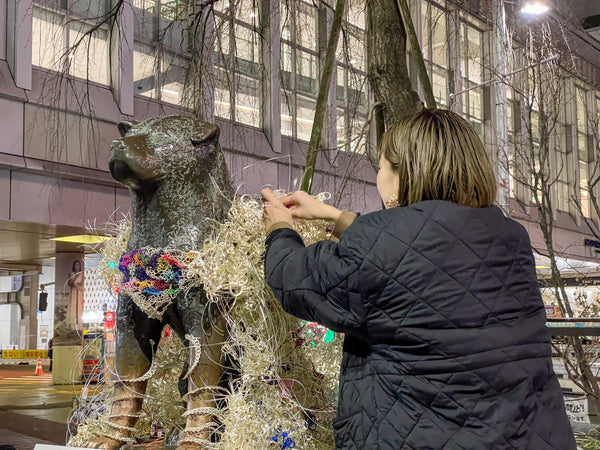


在澀谷時裝週2024上,曾見證無數相遇的「澀谷八公銅像」將限時三天穿上TOKYO MIZUHIKI|東京水引藝術家中村江美製作的獨創水引服裝。
日期:2024年3月17日(日)~19日(二)
地點:澀谷站八公銅像
********************
Emi Nakamura (TOKYO MIZUHIKI)
Title : Hachi | 8
Material : Mizuhiki
size : 1230×800
********************
藝術家寄語
作為人們相約見面的象徵,澀谷的八公銅像一直深受喜愛。我一直在想像,在新冠疫情結束、人們重新重視真實相遇的當今世界,八公銅像會如何看待這一切。水引是日本傳統文化,蘊含著「連結人與人」的意涵,並代代相傳。我秉持著這個理念,投入本次作品的創作。作品中大量使用的淡路結,看起來就像是歡欣鼓舞地高舉雙手。我設想了一個人們攜手合作、連結不斷擴展的世界。此外,即使表面上看似沒有聯繫,但實際上,人際網路的形成是在某處交錯或偶然連結起來的。透過特意融入隨機打結水引的過程,我也想表達人與人之間的連結並非一成不變,而是會隨著時間改變表情和形式而持續下去。
**********************************************************
The statue of Hachiko in Shibuya has long been loved as a symbol of meeting up with people, and after the confusion caused by COVID-19, I wondered how the statue would look in a world where real encounters are now being re-evaluated. Mizuhiki is a traditional Japanese cultural element that has been handed down through the ages and is associated with the idea of ‘bringing people together’. I worked on this work with this concept in mind. The Awaji-knot, which is often used in this work, looks like a happy person with his or her hands raised. I imagined a world in which people join hands with other people, and this connection spreads out as a link. Even if they don’t seem to be connected at first glance, networks of people are actually formed through interactions and accidental connections somewhere along the way. By daring to incorporate the process of randomly tying mizuhiki, we have also expressed the fact that the connections between people are not uniform, but continue to change in expression and form.
**********************************************************
中村江美(TOKYO MIZUHIKI|東京水引)
1983年出生於秋田縣,是位創作水引藝術家。2017年,她利用製作美術展示品的經驗,開始從事水引創作。除了在東京各地進行裝置藝術外,近年來,她還為2023年G7廣島峰會製作了一條總長超過24米的水引桌旗。她不僅製作飾品,也致力於製作燈罩、隔板等大型作品。2020年,她創立了「TOKYO MIZUHIKI|東京水引」,在保留水引優雅的同時,也透過新的手法和多種材質的結合,創造出充滿玩心的作品,希望能讓「日常更加華麗有趣」。她積極與藝術家、工匠、工廠等合作夥伴合作,探索水引表現的可能性。近期,她發表了注重環境保護的「升級再造水引」,並致力於使用廢棄蔬菜進行水引染色。